Appendix 1
More on the Two Most Important Forward Markets
WTI and Brent futures contract mechanics: NYMEX CL, ICE Brent, BFOETM composition, dated Brent, Platts MOC, CFDs, EFP, and EFS.
Chapter 17 (Oil Prices) and Chapter 18 (Futures and Swaps) cover the economics and the narrative of how forward oil markets work: benchmarks, the forward curve, contango and backwardation, and the flow of hedging capital between producers and consumers. This appendix is the plumbing. It collects the tick-level and contract-spec details a working analyst, trader, or hedger needs when executing in WTI or Brent. Contract size, price quotation, expiry calendar, delivery mechanism, BFOETM basket composition, dated Brent and the Platts Market on Close, contracts for differences, and the exchange-for-physical and exchange-for-swap mechanisms that bridge futures to cash and OTC markets. Reference material to look up, not narrative to read cover to cover.
WTI, priced on NYMEX as the CL contract, remains the single most liquid futures contract in the world and the basis for roughly one third of global oil pricing. ICE Brent, the B contract, is the basis for most of the rest of the world. The two markets clear at different venues, settle on different calendars, and deliver in different places, but they are linked so tightly by arbitrage that the WTI-Brent spread is itself one of the most heavily traded instruments in oil.
NYMEX WTI Crude Oil Futures (CL)
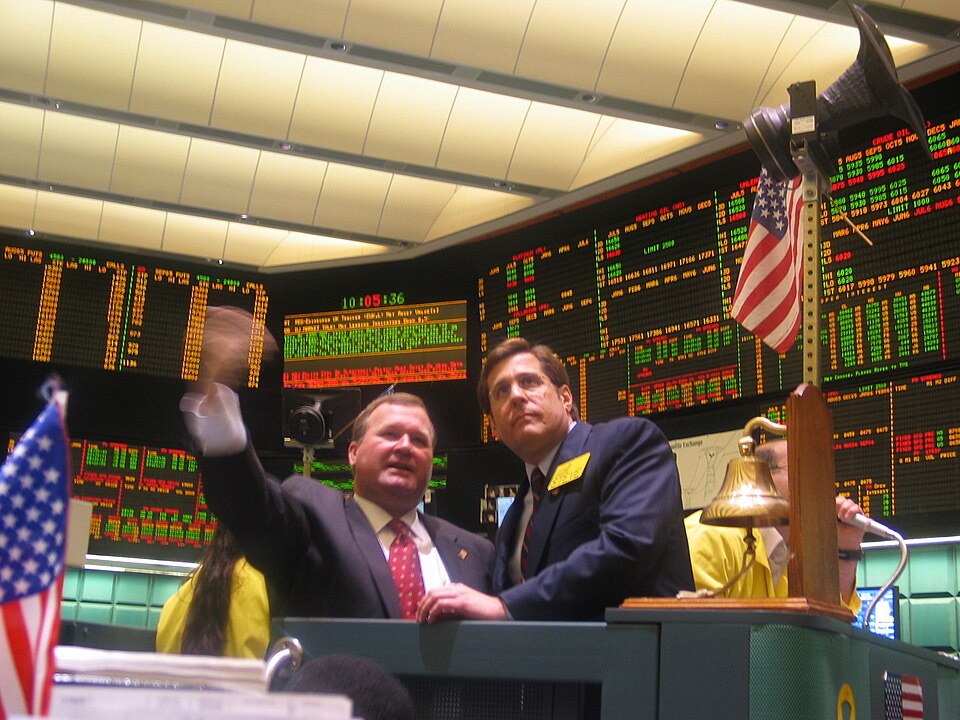
The CL contract trades on CME Globex, the electronic platform operated by the Chicago Mercantile Exchange on behalf of NYMEX. The open outcry crude oil pit on the NYMEX floor in lower Manhattan closed for crude futures in the late 2000s. Any description of the CL contract that mentions floor brokers or pit trading is describing a market that no longer exists. The modern CL contract is a fully electronic, almost-24-hour market with a single daily settlement window.
Each CL contract represents 1,000 US barrels, which is 42,000 US gallons, of light sweet crude oil for delivery at Cushing, Oklahoma. Prices are quoted in US dollars and cents per barrel. The minimum price fluctuation, or tick, is one cent per barrel, which equals ten dollars of profit or loss per contract (1,000 barrels times 0.01 dollars). The ticker is CL. Contracts are listed monthly for the current year and roughly the next ten years forward, though liquidity concentrates in the first year and is very thin beyond two years out.
CME Globex runs continuously from Sunday evening to Friday evening New York time, with a 60-minute maintenance break each weekday afternoon. The daily settlement price for CL is calculated from the volume-weighted average of trades during a two-minute window ending at 2:30 PM New York time, the same time that the old floor pit used to close. The settlement window is purely electronic now, but the 2:30 PM New York clock still sets the close.
The last trading day for a CL contract is the third business day prior to the 25th calendar day of the month preceding the delivery month. For example, the January 2027 WTI contract stops trading on the third business day before December 25, 2026, adjusted if December 25 is a holiday or weekend. After expiry, any trader still holding a long contract must take physical delivery of 1,000 barrels of crude at Cushing, Oklahoma, ratably over the delivery month via pipeline. Any trader still holding a short must make that delivery. In practice, virtually all speculative traders roll their positions forward before expiry. The small fraction of open interest that actually goes to delivery is dominated by commercial firms with real physical exposure at Cushing.
Physical delivery at Cushing is in parcels of 50,000 to 100,000 barrels. Six domestic light sweet grades are deliverable at par: WTI itself (the namesake stream), Low Sweet Mix, New Mexican Sweet, North Texas Sweet, Oklahoma Sweet, and South Texas Sweet. Several foreign grades, including Nigerian Bonny Light and Qua Iboe, UK Brent and Forties, Norwegian Oseberg, and Colombian Cusiana, are also deliverable at small fixed premiums or discounts. API gravity between 37° and 42° and sulfur content below 0.42 percent by weight are required for par delivery. The CME rulebook (Chapter 200 at the time of writing) lists the full deliverable grade schedule and any quality adjustments.
Two mechanical details matter for how large traders execute. The first is Trade at Settlement, or TAS. TAS allows a trader to buy or sell the CL contract at a price that will be equal to the as-yet-unknown daily settlement, plus or minus a small agreed offset. TAS trading runs throughout the day, and the resulting position is priced at the end-of-day settlement window. It is used heavily by index funds and commodity ETFs that need to roll large size without moving the screen price at the close. The second is the April 2020 negative-price rule change. Before April 2020, the CL contract's risk systems assumed prices could not go below zero. After the April 20, 2020 expiry chaos (covered in Chapter 23 (Negative Prices)) drove the May 2020 contract to a settlement of negative 37.63 dollars per barrel, CME updated its systems on April 8, 2020 to permit negative prices in both quoted prices and option strikes.
ICE Brent Crude Oil Futures
The Brent futures contract trades on ICE Futures Europe, the London-based arm of the Intercontinental Exchange. Brent has been electronic-only since April 2005, when ICE closed the old open outcry pit in London. Unlike CL, there is no American open outcry lineage to the Brent contract at all. It has been a screen market for more than two decades.
Each Brent futures contract represents 1,000 barrels of crude oil for delivery based on the BFOETM basket, described in the next section. Prices are quoted in US dollars and cents per barrel. The tick is one cent per barrel, or ten dollars per contract, matching CL. The primary ticker is B on ICE itself, sometimes shown as BRN on data vendors and CO on Bloomberg. Contracts are listed monthly out to roughly ten years forward.
Brent trades continuously from roughly 1:00 AM London time to 11:00 PM London time Monday through Friday, which in New York hours is 8:00 PM the previous evening to 6:00 PM current day. A daily settlement marker is calculated as a volume-weighted average of trades during a window ending at 7:30 PM London time (19:30 GMT or BST depending on the season), which is deliberately aligned to roughly coincide with the NYMEX CL settlement close in New York. This near-simultaneous settlement is what makes WTI-Brent spread trading workable at end-of-day settlement.
Separate from the end-of-day marker is BWAVE, the Brent Weighted Average, which ICE publishes daily as a volume-weighted average of every Brent futures trade over the full day. Saudi Aramco and some other major producers use BWAVE as an input to the formula pricing of their Official Selling Prices (OSPs). A full-day assessment rather than a window assessment, which producers argue is harder to push around at the close than a three-minute window average.
The last trading day for a Brent contract is the last business day of the second month preceding the delivery month. For example, the June 2027 Brent contract stops trading on the last business day of April 2027, subject to the ICE holiday calendar. This is roughly four to six weeks earlier in the calendar than the equivalent CL expiry, which is why Brent's prompt month typically rolls ahead of WTI.
At expiry a Brent trader chooses between cash and physical settlement. Cash is the default if no physical election is made. A cash-settled Brent contract is valued against the ICE Brent Index, a daily average of the 21-day BFOETM forward cargoes published after the expiry. A trader who elects physical settlement rolls the expired futures position into a 21-day BFOETM contract for delivery in the month following expiry, moving out of the exchange-cleared world and into the forward cash market.
BFOETM: the basket, the 2018 and 2023 reforms
“Brent” has not been a single North Sea oil field for a long time. Production from the original Brent field, which gave the benchmark its name in the 1980s, declined to almost nothing by the 2010s and ceased entirely in 2021. To keep the benchmark liquid, ICE and Platts have added other streams to the deliverable basket in a series of reforms. The name of the basket has changed with each addition: Brent alone, then BFOE (adding Forties, Oseberg, Ekofisk), then BFOET (Troll added in 2018), then BFOETM when WTI Midland was added in June 2023. Midland is the biggest reform to Brent pricing in two decades because it wired US shale output directly into the global benchmark. Dated Brent now literally includes American crude, loaded at Enterprise Products terminals on the US Gulf Coast and shipped across the Atlantic.
The six streams in the current basket, with their operators and loading terminals, are summarized below. Operators change hands periodically as North Sea assets are divested between the majors and independents, so this is a snapshot.
| Stream | Loading terminal | Added to basket |
|---|---|---|
| Brent | Sullom Voe, Shetland | Original (1988) |
| Forties | Hound Point, Firth of Forth | 1990s |
| Oseberg | Sture, Norway | 1990s |
| Ekofisk | Teesside, UK | 1990s |
| Troll | Mongstad, Norway | 2018 |
| WTI Midland | US Gulf Coast terminals | June 2023 |
A 21-day BFOETM contract is a forward contract on one of the basket streams for delivery in a specific calendar month. The seller gives the buyer 21 days' notice of the specific 3-day loading window. Until that window is assigned, the contract is generic and fungible across the basket. Once the window is assigned, the contract is a physical cargo with a named loading date. Quality adjustments are embedded in the contract. For Forties, a sulfur de-escalator added after the high-sulfur Buzzard field came online in 2007 reduces the price when the blended stream sulfur exceeds 0.6 percent by weight. Midland has its own quality adjustment to account for the gravity and freight differential. Monthly loading programs are announced by operators around the 20th of the month prior to the loading month, and the announcement of those programs is itself a price-sensitive event.
Figure A1-2: Evolution of the Dated Brent Basket (BFOETM)
Source: Platts / S&P Global Commodity Insights, ICE
Dated Brent and the Platts Market on Close
Once a 21-day BFOETM contract has been assigned a specific 3-day loading window, the oil is said to be “dated” and the contract becomes a dated contract. Dated Brent is the daily spot price assessment published by S&P Global Commodity Insights (the business formerly known as Platts) based on trades and bids and offers for cargoes loading 10 to 32 days forward from the day of assessment. It is the spot reference used to price most internationally traded non-US crude. A typical West African or Mediterranean crude is sold into a refinery as “dated Brent plus or minus a differential,” with the differential set monthly by the producer or negotiated on individual cargoes.
Dated Brent is assessed through the Platts Market on Close (MOC) process, a structured trading window that runs roughly 4:00 to 4:30 PM London time. Traders must publish bids and offers to Platts during the window, and completed trades are used to anchor the assessment. The MOC process has been central to how physical North Sea crude is priced for over 20 years. It is also controversial. The European Commission investigated the process in 2013 and no enforcement action followed, but the episode left producers and regulators aware that a price assessment based on a short window of physical trades is inherently thinner than a futures market.
Three related but distinct prices coexist in the Brent complex: the ICE Brent futures settlement (a global electronic window at 7:30 PM London), the 21-day BFOETM forward contract (an OTC paper market in monthly cargoes), and dated Brent (a physical spot assessment for imminent loading cargoes). They are linked by arbitrage but they do not trade in lockstep. The relationship between them, and the ways producers and refiners hedge across the three, are what the next sections cover.
Contracts for Differences (CFDs)
A Dated Brent Contract for Differences, or CFD, is an OTC instrument that pays the difference between the average dated Brent assessment over a short forward window (usually a week or a 10-day “decade” or a half-month) and the prompt 21-day BFOETM contract price for a month further out. It is used by producers, refiners, and traders to lock in the spread between an imminent physical cargo and a forward paper contract without taking any outright price risk.
A worked example. It is mid-April. A refiner has agreed to buy a Forties cargo loading in the first week of May, priced against dated Brent over the loading window. The refiner wants to hedge that purchase against a forward position it already holds in June BFOETM. The risk is that dated Brent in early May prints above June BFOETM, creating a loss on the dated cargo that is not offset by the forward hedge. By buying a CFD on dated Brent versus June BFOETM for the first week of May, the refiner locks in a known dated-to-BFOETM spread and immunizes the purchase against that particular basis move. CFDs are priced in small fractions of a dollar per barrel and trade actively in the last two or three weeks before the relevant loading window. Liquidity tails off quickly outside the two-week forward horizon.
Exchange for Physical (EFP)
An Exchange for Physical, or EFP, is a bilaterally negotiated transaction in which two counterparties swap an offsetting futures position for an offsetting physical position. It is reported to the exchange and cleared like any other futures trade but is not executed on the order book. EFPs are the standard mechanism for moving in and out of physical positions while adjusting or inheriting a futures hedge.
A worked example. A Gulf Coast refiner holds a long position of 500 June WTI contracts as a hedge against its expected June crude purchases. It now needs to buy a specific 500,000-barrel cargo of LLS (Louisiana Light Sweet) from a producer for June loading. The producer is holding physical LLS and has an opposite need: it wants to lock in a forward price but does not want to execute 500 WTI short contracts in the order book, where the size would be visible. The two parties negotiate an EFP. The refiner transfers its 500 long WTI contracts to the producer at an agreed price, and in exchange receives title to the 500,000-barrel LLS cargo at an agreed differential to that WTI price. The producer is now long LLS short WTI (a hedged forward sale of the cargo). The refiner is now long the physical cargo with no residual WTI position. No market impact, both sides get the position they wanted, and the exchange clears the futures legs.
EFPs are also the standard way that Brent futures physical delivery actually works. When a trader elects physical settlement on a Brent futures contract, the exchange delivers the position as an EFP into a 21-day BFOETM forward contract. The EFP is, in that sense, baked into the Brent expiry mechanism.
Exchange for Swap (EFS)
An Exchange for Swap, or EFS, is the same idea as an EFP but the offsetting leg is an OTC swap rather than a physical cargo. It is used to bridge liquidity from a deep futures market into a thinner OTC swap market, or vice versa.
A worked example. A Middle Eastern producer wants to hedge a million barrels of Dubai crude exposure. The OTC Dubai swap market is liquid but thinner than Brent futures. The producer's bank counterparty quotes a tight bid-offer on Brent futures but a wider one on Dubai swaps. The producer sells 1,000 Brent futures contracts in the liquid screen market, then immediately executes an EFS with the bank: transferring the Brent short futures to the bank in exchange for a short Dubai swap at an agreed Brent-Dubai differential. The producer ends up with the Dubai hedge it wanted. The bank ends up with a Brent short to manage in its own book, where the bank already runs a Brent-Dubai basis position anyway. EFS is how liquidity in the benchmark contract reaches markets in crudes (Dubai, Urals historically, various Asian grades) and products (gasoil, fuel oil) that are not themselves liquid enough for a producer to execute directly at scale.
Contract spec reference
Table A1-1: NYMEX WTI and ICE Brent Contract Specifications
| Spec | NYMEX WTI (CL) | ICE Brent (B) |
|---|---|---|
| Contract size | 1,000 bbl | 1,000 bbl |
| Price quotation | USD per barrel, 2 decimals | USD per barrel, 2 decimals |
| Minimum tick | $0.01/bbl = $10/contract | $0.01/bbl = $10/contract |
| Ticker | CL | B (BRN, CO on vendors) |
| Venue | CME Globex (electronic only) | ICE Futures Europe (electronic only since 2005) |
| Trading hours | Sun 6:00 PM ET to Fri 5:00 PM ET, 60-min daily break | Mon-Fri 01:00-23:00 London (20:00-18:00 ET) |
| Daily settlement window | 2-min VWAP ending 2:30 PM ET | 3-min VWAP ending 7:30 PM London |
| Supplementary assessment | Trade at Settlement (TAS) | BWAVE full-day weighted average |
| Listed months | Current year + 10 years forward | Monthly out to 10 years forward |
| Last trading day | 3rd biz day before 25th of month preceding delivery | Last business day of 2nd month preceding delivery |
| Settlement at expiry | Physical delivery default, no cash option | Cash default (ICE Brent Index) or physical into 21-day BFOETM |
| Delivery location | Cushing, Oklahoma | BFOETM basket, loading terminals in UK, Norway, US Gulf Coast |
| Par deliverable grades | 6 domestic light sweet + 6 foreign at fixed differentials | 6 BFOETM streams (Brent, Forties, Oseberg, Ekofisk, Troll, Midland) |
| Quality specs at par | 37°-42° API, sulfur <0.42% wt | Stream-specific, with sulfur de-escalator on Forties |
| Negative prices permitted | Yes (since April 8, 2020) | Yes |