Chapter 10
Petrochemicals
Petrochemicals from oil and gas: ethylene, propylene, plastics, fertilizers, and the chemical building blocks of modern industry.
Chemicals from Oil and Gas
Petrochemicals are chemicals manufactured from hydrocarbon feedstocks, as distinct from oleochemicals (made from animal and vegetable fats) and traditional inorganic chemistry. As of 2026 petrochemicals account for roughly 8% of total global crude oil and natural gas use, up from 6% when the first edition was published. Global petrochemical industry revenue is on the order of 600 billion US dollars. Unlike most petroleum products, petrochemicals are not burned as fuel. They are used to make plastics, synthetic fibers, solvents, fertilizers, detergents, rubbers, coatings, and hundreds of other building blocks of modern consumer and industrial life.
Petrochemical End Uses (2024)
This chapter covers the industrial chemistry that sits on top of oil and gas, not the chemistry of oil itself. For the molecular structure of paraffins, olefins, naphthenes, and aromatics inside crude, see Chapter 4 (Chemistry). For the refinery units that produce the intermediate streams cracked here, see Chapter 7 (Refining). For NGL fractionation and the ethane-rejection economics that govern US cracker feedstock pricing, see Chapter 3 (Components).
Two Feedstock Routes
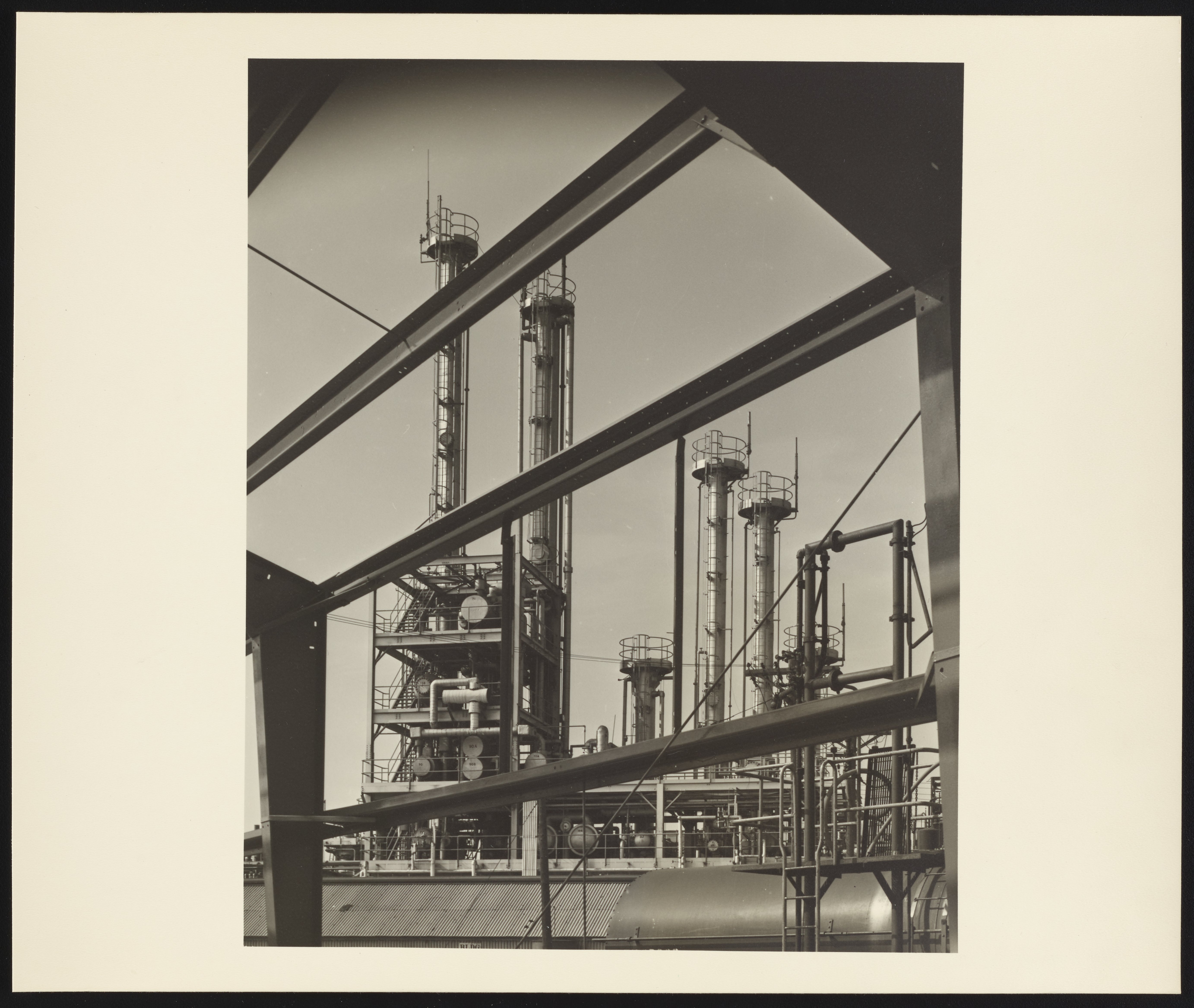
Virtually all of the world's petrochemical output comes out of a steam cracker, a furnace that heats hydrocarbon feed with steam to around 800 to 850 degrees Celsius for a fraction of a second and then quenches it hard. The severe thermal shock cracks the feed into a mixture of small, reactive, mostly unsaturated molecules called olefins. Every downstream petrochemical value chain starts at a steam cracker output stream.
Steam crackers come in two distinct flavors depending on feed. The choice is mostly geographic and reflects what is cheap locally.
Table 10-1: Ethane cracker vs naphtha cracker: typical product slate
| Output | Ethane cracker | Naphtha cracker |
|---|---|---|
| Ethylene | 80% | 30% |
| Propylene | 2% | 15% |
| Butadiene and C4s | 3% | 10% |
| Pyrolysis gasoline (BTX-rich) | 3% | 20% |
| Fuel gas (methane, hydrogen) | 12% | 25% |
| Dominant regions | US Gulf Coast, Middle East, Alberta | Western Europe, Japan, Korea, China, India |
The US and Middle East run gas-based crackers on ethane because associated gas from oil wells is cheap and NGL fractionation delivers purity ethane at a few cents per pound. The downside is that ethane cracks mostly to ethylene and produces almost no co-products, so the US is structurally long polyethylene and structurally short aromatics and butadiene. Europe, Japan, Korea, and much of China and India run liquids-based crackers on naphtha, the same naphtha cut that a US refinery sends to the reformer. Naphtha crackers produce a richer slate with meaningful propylene, butadiene, and BTX. Crude-to-chemical super-complexes in China and the Middle East feed even heavier cuts, all the way down to atmospheric residue in some designs.
Figure 10-3: Steam Cracker Feedstock Shares (2024)
Global
Americas
Europe
Middle East
Asia-Pacific
Sources: IEA Future of Petrochemicals, Argus Steam Cracker Outlook 2025, S&P Global
The feedstock split varies dramatically by region. The Americas and Middle East are dominated by ethane because both have abundant cheap natural gas. Europe and Asia-Pacific remain naphtha-dependent because they lack large-scale ethane supply. China's coal-to-olefins (CTO) and methanol-to-olefins (MTO) capacity adds a third feedstock route that is unique to that country. The regional feedstock mix drives everything downstream: product slate, margin structure, trade flows, and competitive position.
The Six Basic Building Blocks
Out of steam crackers and catalytic reformers come six molecules that serve as the foundation of almost all downstream petrochemistry. The first three (ethylene, propylene, butadiene) are olefins. The last three (benzene, toluene, xylenes) are aromatics, collectively called BTX.
Table 10-2: The six petrochemical building blocks
| Block | Formula | Primary source | Flagship downstream product |
|---|---|---|---|
| Ethylene | C2H4 | Steam cracker (ethane or naphtha) | Polyethylene (PE) |
| Propylene | C3H6 | Steam cracker, FCC off-gas, on-purpose PDH | Polypropylene (PP) |
| Butadiene | C4H6 | Steam cracker C4 stream | Synthetic rubber (SBR, polybutadiene) |
| Benzene | C6H6 | Pygas, reformate, toluene disproportionation | Styrene, phenol, cyclohexane (nylon) |
| Toluene | C7H8 | Reformate, pygas | TDI (polyurethane), solvent, gasoline blendstock |
| Xylenes (mixed) | C8H10 | Reformate, pygas | Para-xylene to PTA to PET polyester and bottles |
The Ethylene Value Chain
Ethylene is the most produced organic chemical on the planet, with global nameplate capacity above 220 million metric tonnes per year as of 2026. Because ethylene is a hazardous, hard-to-ship gas, the downstream conversion plants almost always sit next door to the cracker, connected by short pipeline. The dominant destinations:
- Polyethylene (PE) in three main density families: LDPE (low, flexible films and wire insulation), LLDPE (linear low, stretch film, agricultural film), and HDPE (high, rigid bottles, pipe, crates). Together, PE is roughly 60% of ethylene consumption.
- Ethylene oxide (EO), which runs on to mono-ethylene glycol (MEG). MEG goes into PET polyester (bottles, textile fiber) and into automotive antifreeze.
- Vinyl chloride monomer (VCM), which polymerizes to PVC for pipe, window frames, flooring, and wire insulation.
- Ethylbenzene, which dehydrogenates to styrene and then polymerizes to polystyrene or copolymers like ABS.
- Alpha-olefins (butene, hexene, octene), used both as comonomers in LLDPE production and as feedstock for lubricant base oils and detergents.
The Propylene Value Chain
Propylene historically came out of steam crackers and FCC off-gas as a co-product, but demand has grown faster than those by-product streams can keep up with. The gap has been filled by on-purpose propylene: propane dehydrogenation (PDH) units, which the US Gulf Coast and China have built in large numbers since 2015, and methanol-to-olefins (MTO) units in coal-heavy parts of China. Downstream, roughly 65% of global propylene goes to polypropylene (PP), a tough, light, cheap, recyclable plastic found in car bumpers, yogurt cups, medical devices, and nonwoven fabrics (surgical masks, diapers). The rest goes to acrylonitrile (for ABS and acrylic fibers), propylene oxide (polyurethane), cumene (phenol and acetone), and acrylic acid (superabsorbent polymers).
The Aromatics Value Chain
BTX comes mostly from two sources: catalytic reformate out of a refinery and pyrolysis gasoline out of a naphtha cracker. The aromatics complex at a refinery or petrochemical site typically includes an extractive distillation unit to pull the aromatics out of reformate, a benzene-toluene-xylene separation train, a toluene disproportionation unit to balance the ratio of benzene to xylenes, and a para-xylene crystallization or adsorption unit.
Benzene feeds styrene (polystyrene, ABS), cumene (phenol, acetone, bisphenol-A, polycarbonate, epoxy resins), cyclohexane (caprolactam, nylon-6), and nitrobenzene (aniline, MDI, polyurethane). Toluene is used as a solvent, converted to benzene, and blended into gasoline for octane. Para-xylene is the most valuable of the three by volume: it is oxidized to purified terephthalic acid (PTA), which then polymerizes with mono-ethylene glycol to form polyethylene terephthalate (PET), the material in most beverage bottles and polyester clothing.
Methanol, Ammonia, and Urea
Two enormous commodity chemicals start from natural gas rather than from the steam cracker route.
Methanol (CH3OH) is made by reforming natural gas to syngas (a mix of carbon monoxide and hydrogen) and then catalytically combining the two. Global methanol production exceeds 100 million tonnes per year. Uses include formaldehyde, acetic acid, MTBE (as a gasoline oxygenate in many markets outside the US), dimethyl ether (DME), biodiesel, and methanol-to-olefins (MTO) plants in China. Methanol is also being piloted as a marine bunker fuel for dual-fuel ships.
Ammonia (NH3) is made by combining nitrogen from the air with hydrogen from steam methane reforming in the Haber-Bosch process, which was first commercialized in 1913 and remains one of the most important industrial processes ever developed. Ammonia is combined with carbon dioxide to make urea, the dominant nitrogen fertilizer. It is a sober fact that roughly half of the nitrogen atoms in the typical human body came through a Haber-Bosch reactor at some point. Ammonia is also being explored as a zero-carbon marine fuel.
The US Shale Advantage
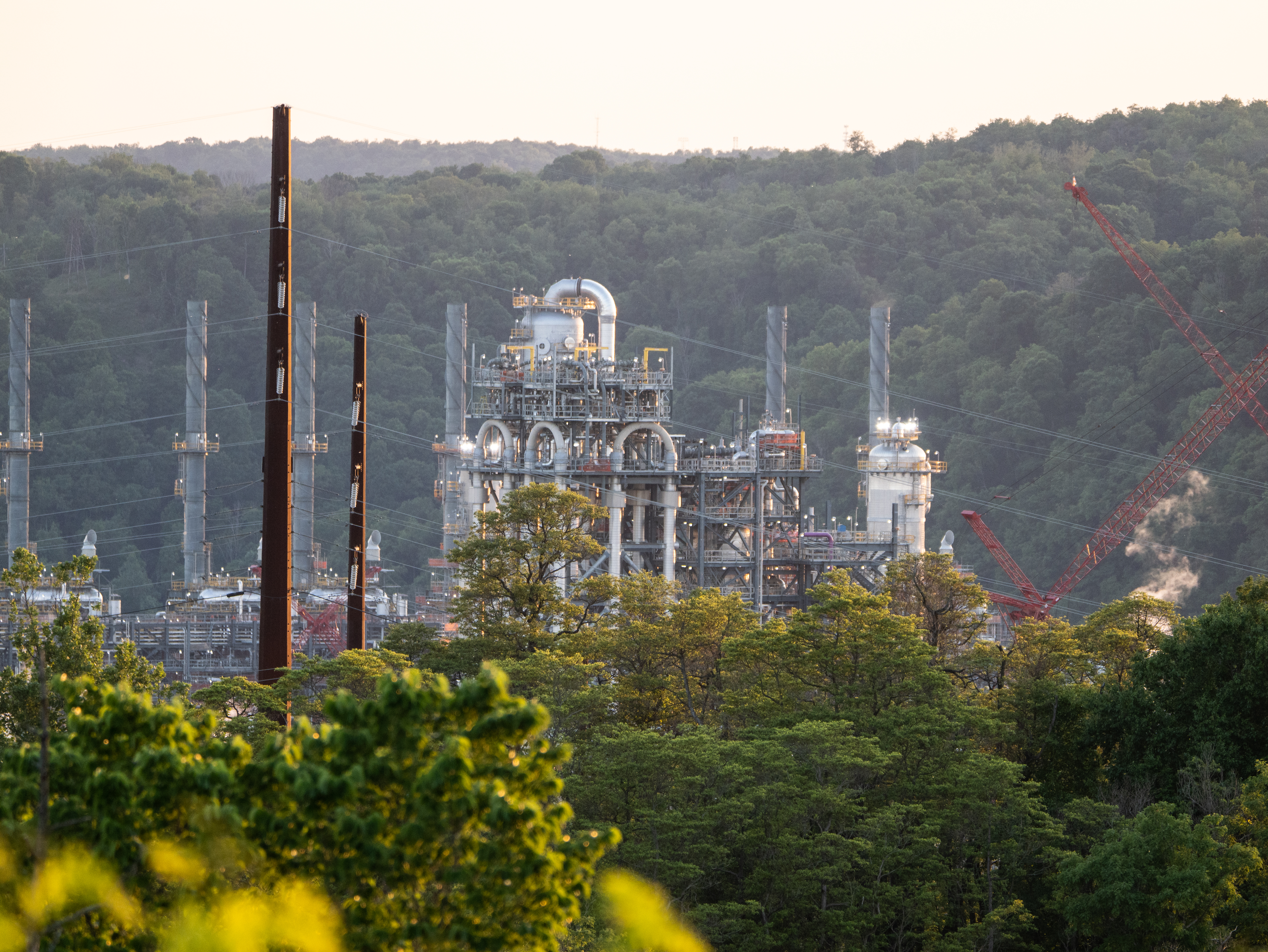
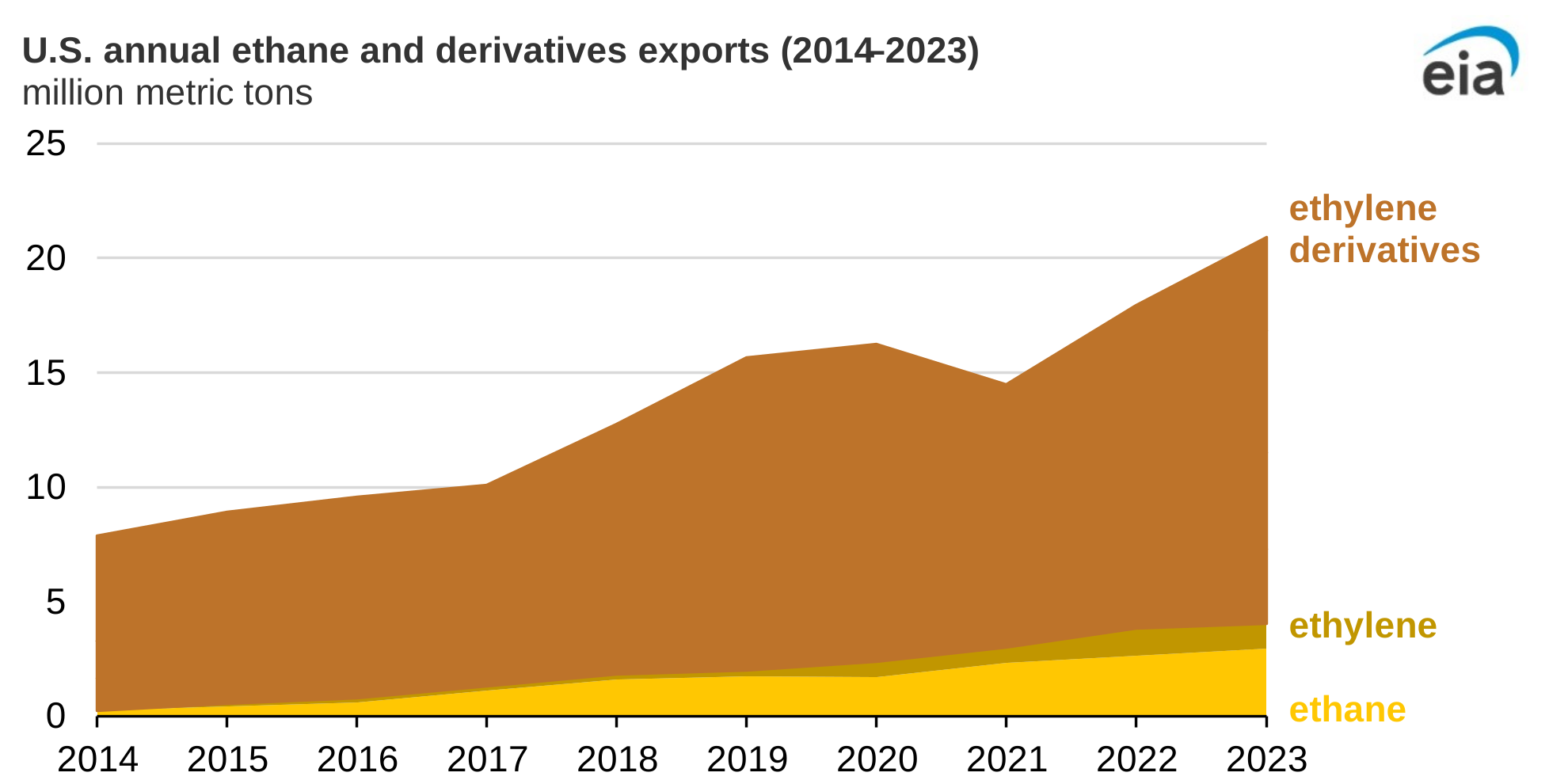
The biggest change in global petrochemicals since the first edition has been the collapse of US ethane prices after the shale gas boom. Starting around 2010, cheap associated gas from the Permian, Marcellus, and Eagle Ford flooded the Mont Belvieu NGL hub with ethane, driving ethane prices to levels that made US ethane crackers the lowest-cost producers of ethylene in the world. The resulting Gulf Coast build-out is outsized: ExxonMobil Baytown, Dow Freeport, CP Chem Sweeny, Formosa Point Comfort, Sasol Lake Charles, and Shell Monaca in Pennsylvania, the first new cracker outside the Gulf in a generation. The US is now a net exporter of polyethylene for the first time since the 1980s, and a major exporter of purity ethane to crackers in Europe, India, and China via specialized very-large ethane carrier (VLEC) ships. Chapter 24 (US LNG) picks up the LNG side of the same story.
Plastics in Context and the China Overbuild
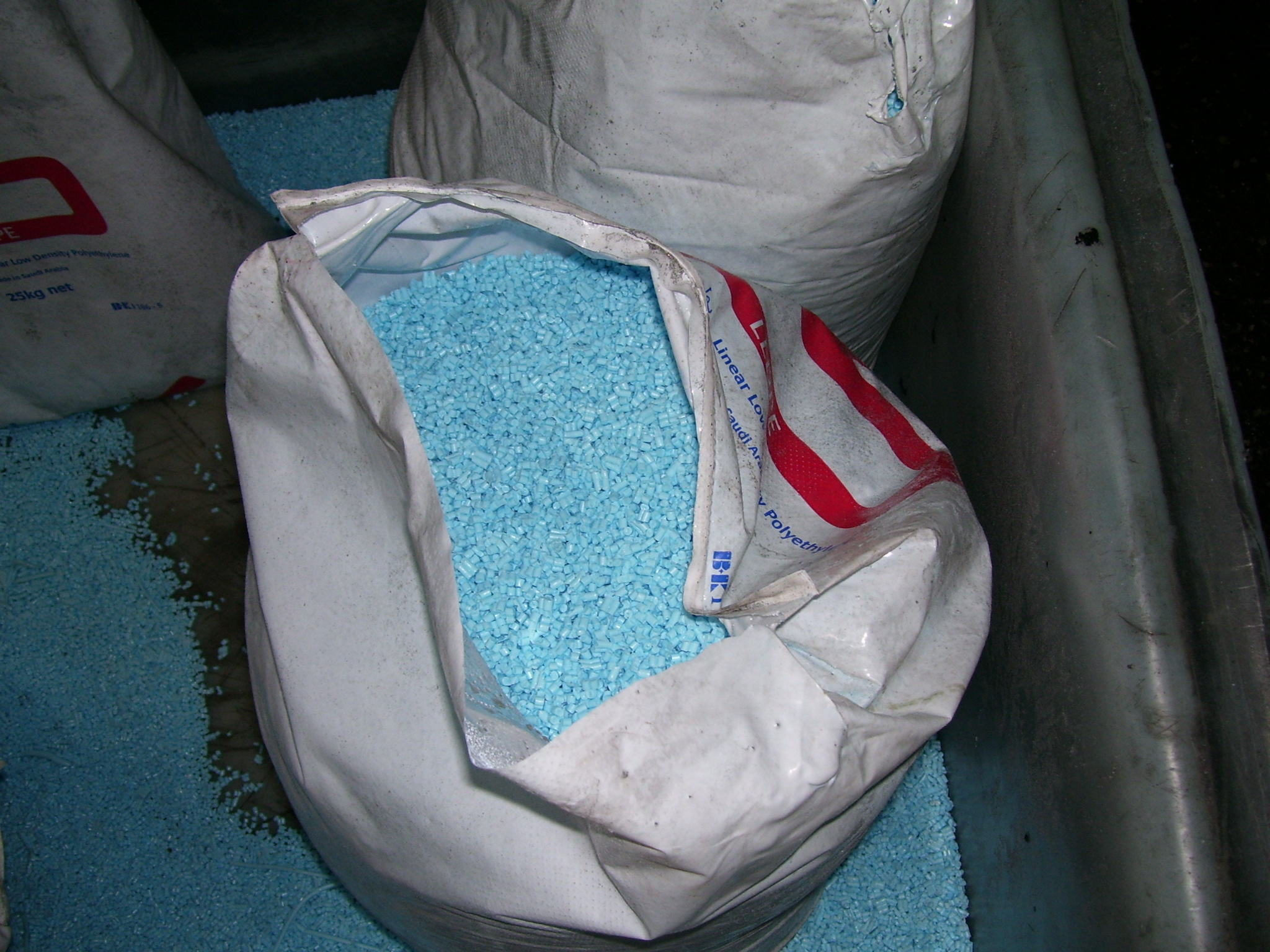
Global plastics production runs at roughly 400 million tonnes per year as of 2026. PE and PP together account for more than half of that. The seven resin identification codes (PET 1, HDPE 2, PVC 3, LDPE 4, PP 5, PS 6, and "other" 7) are familiar from recycling bins; only PET and HDPE recycle at meaningful rates. Chemical recycling and pyrolysis-to-feedstock have been piloted heavily in the last five years with limited commercial success.
Figure 10-7: Global Plastics Recycling Rate (2000 to 2024)
The recycling gap. Global plastics production has tripled since 2000 but the recycling rate has moved from 6% to 10%. Most plastic is not recycled: it is buried, burned, or leaked.
Sources: OECD Global Plastics Outlook, Our World in Data
The market story of 2022 to 2025 has been Chinese overcapacity. Between 2020 and 2025 China added more than 30 million tonnes per year of ethylene capacity, mostly in massive coastal refining-chemical complexes at Zhoushan, Gulei, and elsewhere. The new capacity exceeded domestic demand growth and collapsed margins across the entire global merchant chemical market. Marginal European naphtha crackers have begun closing in response; US ethane crackers remain profitable thanks to a feedstock cost advantage that Chinese naphtha crackers cannot match.
Figure 10-8: Global Ethylene Production Capacity by Region (2024)
Sources: IHS Markit, ICIS, industry estimates (2024). Total global capacity approximately 210 Mtpa.
2nd Edition Update: The Petrochemical Demand Driver
This section is new to the 2nd edition.
Petrochemicals are the fastest growing source of oil demand. The IEA projects petrochemicals will account for more than a third of oil demand growth through 2030 and nearly half by 2050. As transportation fuel demand potentially peaks under EV adoption, petrochemical feedstock demand partially offsets the decline. This is the "non-burnable" demand for oil and gas that shows up in most long-term balances, and it has become the swing variable in oil demand forecasts.
Monomers like ethylene and propylene are combined in repeating patterns to form polymers like polyethylene and polypropylene. The vast majority of consumer plastics are made from just those two polymers plus PET, PVC, and polystyrene. Five molecules account for most of the plastic in the world.
Petrochemicals are non-combustion demand for oil and gas, and they grow even in aggressive energy transition scenarios. The link between crude, NGL feedstocks, and plastic production matters more every year for long-term hydrocarbon demand forecasts.
The above was updated in 2026. For the full original 2009 chapter, download the 1st edition 2009 PDF.