Chapter 3
Components of Oil Liquids
What counts as oil: crude, condensate, NGLs, biofuels, refinery gains, and how total oil liquids supply is measured globally.
What Makes Up "Oil Liquids"?
Total worldwide oil liquids production is roughly 104 million barrels per day as of 2026, up from about 85 million bpd when Oil 101 was first published. This total is not just conventional crude oil. It is the sum of six distinct components: conventional crude, tight (shale) oil, condensates, natural gas liquids, unconventional heavy oil and syncrude, biofuels, and the roughly 2% refinery gain that appears when dense molecules get cracked into lighter ones. Each of these streams has its own reservoir chemistry, its own infrastructure, and its own price.
Figure 3-1: Global Oil Liquids Supply 1986-2025
2025 breakdown - total 103 mmbpd
| Conventional crude + condensate | 71 |
| Natural Gas Liquids (NGLs) | 14 |
| Tight oil (US shale) | 9 |
| Unconventional heavy (oil sands, Venezuela) | 4 |
| Biofuels (ethanol, biodiesel) | 3 |
| Refinery processing gain | 2 |
| Total | 103 |
Hover chart to see any year. Click a row to see that component over time.
Updated from Figure 3-1 of the first edition (2009): Oil liquids are still a family, but the family has grown. Since the original 2009 chart, US tight oil and NGLs have transformed the supply mix, adding roughly 17 mmbpd of new production.
The chart above is the single most important picture in the barrel. Between 2007 and 2025 the growth in total liquids came almost entirely from two places: US tight oil (up roughly 9 million bpd from near zero) and US and Middle East NGLs (up roughly 6 million bpd). Biofuels added another 2 million bpd. Conventional crude is essentially flat. Canadian oil sands and other unconventional heavy barrels are flat. Refinery gain is flat. If you strip out the shale and NGL contribution, world oil liquids would have entered a structural decline around 2005.
What Is Actually In a Barrel
A US barrel is 42 US gallons, a volume standardized by Standard Oil in the 19th century when actual wooden whiskey barrels were used to move crude. After processing, a typical US refinery turns that 42 gallons of crude into a slightly larger volume of finished products, because cracking heavy molecules into lighter ones expands the total liquid volume by about 2%. The approximate US yield by product is shown below.
Table 3-1: What a 42-gallon US barrel of crude becomes (typical US refinery yield)
| Product | Share of barrel | Gallons per barrel | Primary use |
|---|---|---|---|
| Gasoline (motor) | 45% | 19.4 | Passenger vehicles, light trucks |
| Distillate (diesel + heating oil) | 28% | 11.8 | Trucks, rail, marine, home heat |
| Jet fuel / kerosene | 10% | 4.1 | Commercial and military aviation |
| LPG (propane, butane) | 4% | 1.7 | Home heat, petchem feed, auto gas |
| Residual fuel oil | 3% | 1.3 | Bunker fuel, industrial boilers |
| Petrochemical feedstocks | 3% | 1.3 | Ethylene, propylene, aromatics |
| Lubricants, waxes, asphalt, coke, other | 5% | 2.1 | Industrial, paving, specialty |
| Refinery gain | +2% | +0.8 | Volume expansion from cracking |
The yield from any individual refinery depends on crude slate, configuration, and local product demand. A simple topping refinery running light sweet crude leans heavier into naphtha and kerosene. A deep-conversion Gulf Coast refinery running heavy sour crude with coking and hydrocracking leans into diesel and gasoline at the expense of residual fuel. European refineries, serving a diesel-long market, configure for distillate maximization. Chapter 9 (Finished Products) covers each; Chapter 7 (Refining) covers the process units that make them.
Conventional Crude Oil
Conventional crude is what most people think of when they hear "crude oil." It is a hydrocarbon liquid that flows from the reservoir under its own pressure or with the help of artificial lift, with a density typically between 10 and 50 degrees API. Refineries are usually configured to run a narrower range such as 30 to 35 degrees API, with heavier or lighter barrels sold at a discount to the refiner's sweet spot. Conventional crude production has barely grown since 2005, and the growth in total oil liquids has come from the other components in the chart above.
Streams, Blends, and Grades
Chapter 2 (Crude Oil Assay) introduced the idea of a crude oil assay. The distinction between a stream, a blend, and a grade needs nailing down, because these words get used interchangeably and mean different things in practice. A stream is a physical flow from a particular field, gathering system, or platform. A blend is an assembly of multiple streams mixed at a tank farm or pipeline origin to hit a target specification. A grade is a marketing construct: a named quality spec with an API gravity, a sulfur content, and a trading location.
The journey of a barrel from wellhead to pipeline runs something like this. The wellhead fluid is a three-phase mixture of oil, gas, and water. It enters a gathering system that feeds a gas-oil separation plant, which drops the water out, flashes the associated gas, and stabilizes the liquid by boiling off the lightest volatile ends so that the remaining stock has a vapor pressure safe for pipeline and tankage. That stabilized stream then enters a common pipeline or is trucked to a terminal. At the terminal, multiple streams with slightly different assays get blended into the named grade that actually trades in the market, such as West Texas Intermediate at Cushing, Brent Blend off the UK, or Bonny Light in Nigeria. A trader buying WTI is not buying a single field; she is buying whatever assembly of streams is currently passing the quality spec at Cushing.
Condensates
Condensates sit in the grey zone between crude oil and natural gas liquids. They are very light hydrocarbons (typically above 45 degrees API) that exist as gas at reservoir temperatures and pressures and condense to liquid as they drop in pressure and temperature on the way to the surface. Condensates are highly valuable because they require minimal refining to produce gasoline blendstock and petrochemical feed. Simple "condensate splitters" can process them without the expensive cracking and coking units that heavier crudes require.
There are two commercial varieties. Lease condensate is the liquid that drops out at the wellhead separator and is booked as crude oil in EIA statistics; this is the barrel that flows through crude pipelines. Plant condensate (also called pentane plus or natural gasoline, C5+) is the liquid that drops out at a downstream gas processing plant and is booked as an NGL. The two are chemically similar but regulated differently, and the distinction drove a public policy fight in 2014 when the US Commerce Department's Bureau of Industry and Security quietly ruled that minimally processed lease condensate could be exported as a petroleum product rather than as restricted crude oil. That ruling, followed by the full lifting of the US crude export ban in December 2015, turned the Eagle Ford and Permian condensate boom into an export business.
Natural Gas Liquids In Detail
NGLs are very light hydrocarbon molecules, gases at atmospheric conditions but easily compressed or cooled into liquid form, which are separated from the natural gas stream in gas processing plants. As of 2026, US NGL production exceeds 6 million bpd, driven by prolific associated gas from the Permian, Marcellus, Haynesville, and Bakken. The NGL barrel breaks down into five purity products, each trading separately once fractionated. Molecular structures for these compounds are covered in Chapter 4 (Chemistry).
NGLs are not the same thing as LNG, and the two are easy to confuse because both involve turning gas into a liquid. The difference is which molecules, and why. LNG is methane, the lightest molecule in the stream and the one that stays in the pipeline, chilled to roughly minus 162 degrees Celsius so that it shrinks to about one six-hundredth of its gaseous volume and will fit on a ship. It is a transport state rather than a separate product, so warming it at the far end gives back ordinary pipeline gas. NGLs are the heavier molecules taken out of that stream, ethane through natural gasoline, which liquefy under modest pressure at ordinary temperatures and are sold as distinct products that stay liquid all the way to the buyer.
The two are consecutive stages of one plant chain rather than alternatives. Gas processing strips the NGLs out first, and the dry methane left behind is what a liquefaction train chills. That order is a physical requirement rather than a commercial preference, because the heaviest of these molecules freeze solid at LNG temperatures and would plug the cryogenic heat exchangers, so a liquefaction plant always has gas processing in front of it. Chapter 24 (US LNG Exports) covers liquefaction as an export business.
Table 3-2: The five NGL purity products
| Component | Formula | Primary use | Trading hub |
|---|---|---|---|
| Ethane | C2H6 | Steam cracker feed for ethylene | Mont Belvieu, Conway |
| Propane | C3H8 | Home heat, cooking, petchem feed, crop drying | Mont Belvieu, Conway, Edmonton |
| Normal butane | n-C4H10 | Gasoline blendstock (winter), petchem feed | Mont Belvieu |
| Iso-butane | i-C4H10 | Alkylation feedstock for premium gasoline | Mont Belvieu |
| Natural gasoline (C5+) | C5+ | Diluent for Canadian heavy crude, petchem feed | Mont Belvieu, Conway |
Mont Belvieu, Texas, 25 miles east of Houston, is the canonical US NGL market. Its salt caverns store hundreds of millions of barrels of purity product, and its fractionation towers process the bulk of the US mixed NGL stream. Conway, Kansas is the Mid-Continent equivalent. Edmonton, Alberta is the Canadian hub. Prices at these locations set the reference for every downstream contract.
Figure 3-2: Mont Belvieu NGL Purity Product Prices (Annual Average)
Illustrative annual averages. Natural gasoline (C5) closely tracks crude oil prices; ethane (C2) is driven by petrochemical cracker demand and trades at a persistent discount. Source: EIA Mont Belvieu spot prices.
Fractionation and Ethane Rejection
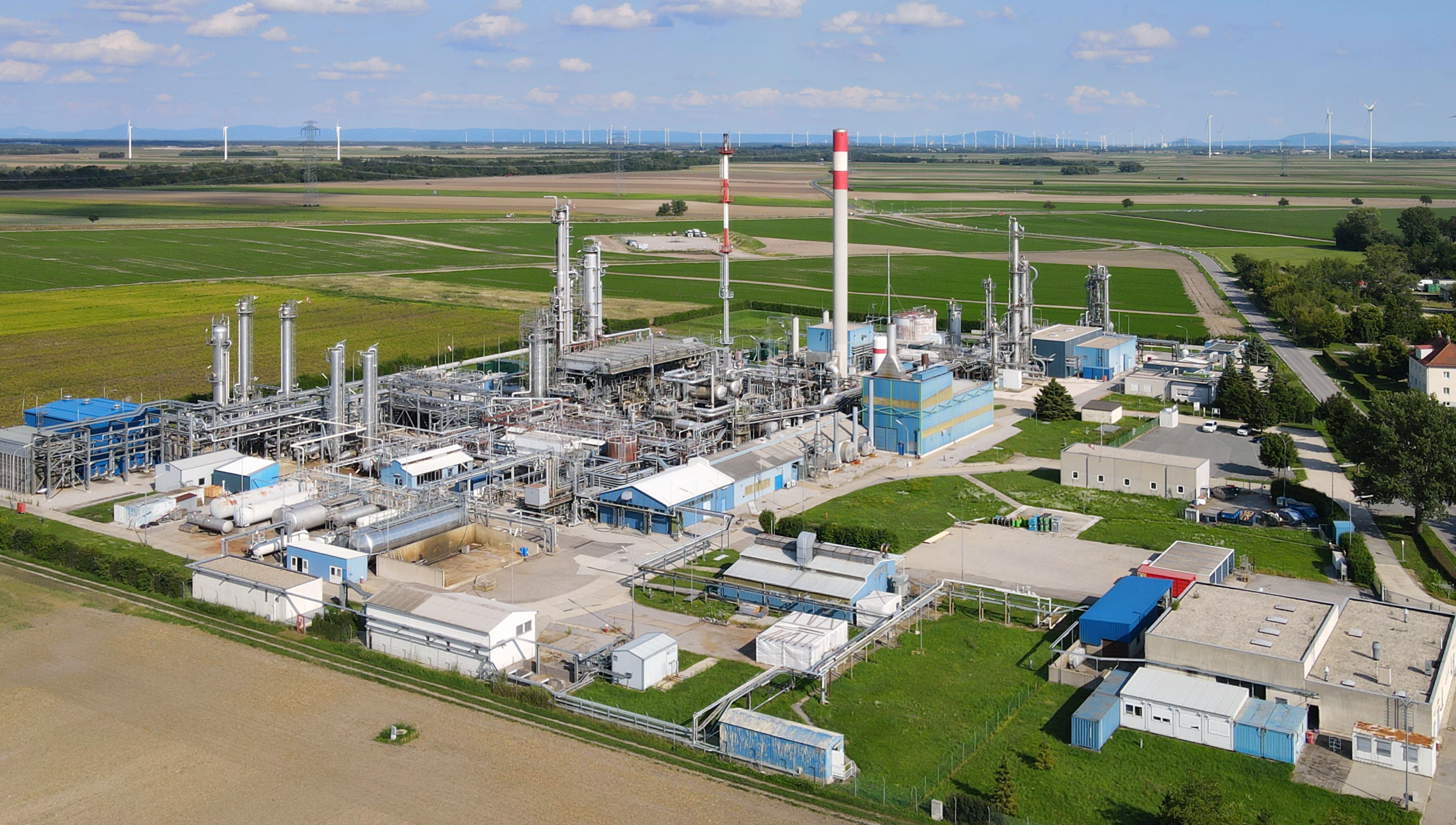
At the gas plant, raw mixed NGLs arrive as a single stream often called Y-grade, and they leave as five purity products after a sequence of distillation towers called a fractionation train. The deethanizer pulls ethane off the top; the depropanizer pulls propane; the debutanizer pulls butanes; and a final splitter divides normal butane from iso-butane. Natural gasoline is the bottom cut.
Before the NGL stream even gets to the fractionator, the gas processor has to make a daily economic decision on ethane. When the value of ethane as a petchem feedstock (set at Mont Belvieu) exceeds its value as methane-equivalent heat in the sales gas pipeline, the processor recovers the ethane and ships it as a liquid. When the Mont Belvieu ethane price dips below that BTU-equivalent floor, the processor rejects the ethane, leaving it in the sales gas stream to be burned as methane. US ethane rejection peaked at several hundred thousand barrels per day during the 2015 to 2016 commodity downturn. The call has shifted firmly to recovery since 2018 as new Gulf Coast ethane crackers came online and US ethane exports to Europe, India, and China ramped up. Chapter 10 (Petrochemicals) covers the petrochemical demand side.
Naphtha: The Other Petchem Feed
Naphtha is the light cut from atmospheric distillation that boils between roughly 180 and 380 degrees Fahrenheit. Inside a refinery it has two main homes. Light naphtha (C5 to C6) feeds the isomerization unit or becomes gasoline blendstock directly. Heavy naphtha (C7 to C10) feeds the catalytic reformer, which rearranges straight-chain paraffins into aromatic and branched structures to produce reformate, a high-octane gasoline blendstock rich in benzene, toluene, and xylenes.
Outside the refinery, naphtha is the single largest steam cracker feedstock globally. European and Asian crackers run primarily on naphtha and produce a more balanced olefin-plus-aromatics product slate than the ethane crackers that dominate in the US and the Middle East. That structural difference, naphtha versus ethane, is the reason the US has a structural cost advantage in polyethylene but imports aromatics, while Asia produces its own aromatics but imports polyethylene.
Unconventional Crude Oil
Unconventional crude requires processing that conventional refineries do not typically perform before the barrel can flow through a standard crude pipeline. The three historical sources are oil sands (primarily from Canada and Venezuela), gas-to-liquid or coal-to-liquid syncrude (Fischer-Tropsch synthesis, mainly from Qatar and South Africa), and the largely dormant kerogen shale resource in the US Green River formation, which remains economically impractical.
Canadian oil sands production has grown to roughly 3.5 million bpd by 2026, producing bitumen at 8 to 12 degrees API that must be either upgraded to synthetic crude oil at a dedicated upgrader or blended with lighter diluents, usually natural gasoline or condensate, to flow through pipelines as "dilbit" or "railbit". The two main extraction methods are surface mining, used on shallow deposits near the Athabasca River, and in-situ steam injection techniques such as Steam Assisted Gravity Drainage (SAGD) used on deeper formations. Canadian dilbit is the reason North American condensate prices are a function of Alberta heavy oil economics as much as of petrochemical demand.
Refinery Gain
Refinery gain is the reason liquid output from a refinery occupies more volume than crude input, even though weight is unchanged. Heavy, dense molecules are cracked into a larger number of lighter molecules that occupy more space per unit mass. Globally, refinery gain runs around 2% of crude input on a volume basis. It shows up in every supply-demand balance as a roughly 2 million bpd "free" contribution from the downstream sector.
2nd Edition Update: The Shale and NGL Revolution
This section is new to the 2nd edition.
The biggest development since Oil 101 was first published is the rise of tight oil from shale formations, primarily the Permian Basin, Bakken, and Eagle Ford. Using horizontal drilling and hydraulic fracturing, US tight oil production grew from near zero in 2008 to over 9 million bpd by 2026. This is light sweet crude, typically 40 to 45 degrees API, chemically distinct from the kerogen oil shale discussed in the first edition. The same wells co-produce associated gas that carries the NGL stream, so tight oil and NGLs are really one story. Chapter 21 (Shale Revolution) covers it in full.
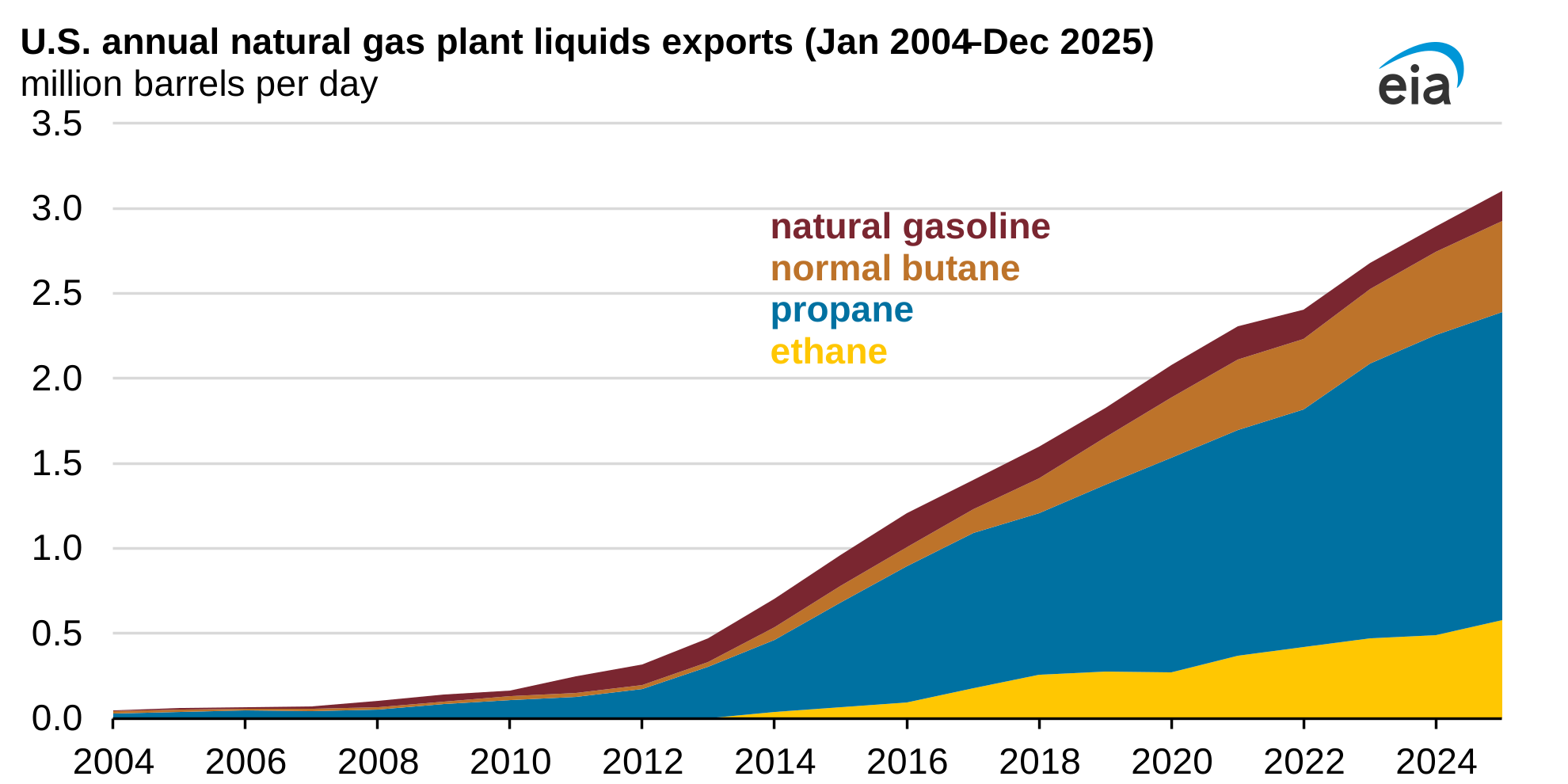
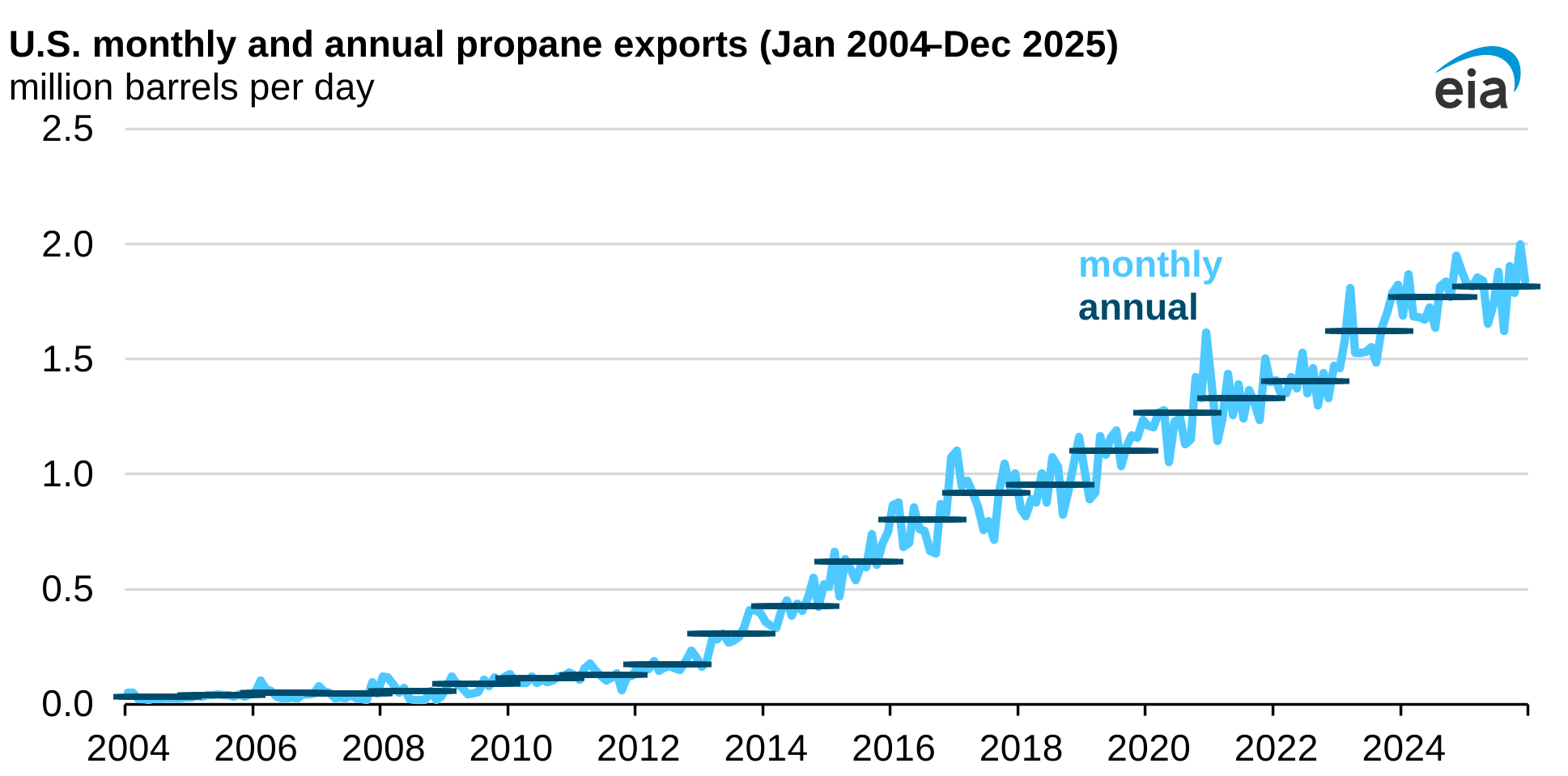
Global oil supply components changed since the first edition of Oil 101. Conventional crude's share has declined while NGLs, condensates, and tight oil have grown. This impacts refinery configurations, trade flows, and product yields, which Chapter 7 (Refining) through Chapter 11 (Transporting Oil) cover in detail.
The above was updated in 2026. For the full original 2009 chapter, download the 1st edition 2009 PDF.