Chapter 15
Environmental Regulations
Oil industry environmental rules: emissions standards, sulfur limits, carbon pricing, fuel regulations, and climate policy impacts.
Three Categories of Environmental Regulation
Environmental regulations affecting oil fall into three broad categories, each with its own statutory history, its own enforcement agency, and its own engineering consequences for refiners, pipeline operators, and automakers. The first category is fuel content: the sulfur, benzene, lead, vapor pressure, and oxygenate rules that dictate what a gallon of gasoline or diesel is actually allowed to contain. The second is operational safety: pipeline integrity management, double-hull tanker requirements, tank farm containment, and HAZMAT rail rules that govern how oil is moved and stored. The third is greenhouse gas regulation, which works through four instruments that operate on completely different principles: fleet fuel economy and tailpipe CO2 standards, which cap emissions per vehicle; cap-and-trade systems, which fix a total quantity of allowed emissions and let participants buy and sell the right to emit within it; clean-energy tax credits, which pay for the alternative instead of penalizing the fuel; and carbon border adjustments, which charge an importer the carbon price it avoided by producing outside the regulating jurisdiction.
Those three categories organize the rest of this chapter, but not immediately. Fuel content and greenhouse gases both run on the same underlying machinery, so the next three sections cover it first: the Clean Air Act that authorizes most US environmental regulation of oil, the six pollutants for which it sets national limits, and the waiver that allows California alone to go further. Fuel content is then taken up under gasoline and diesel, operational safety under spills, pipelines, and tanks, and greenhouse gases across the final three sections.
The US has led the world on the first two categories through the Clean Air Act, the Clean Water Act, the Oil Pollution Act of 1990, and PHMSA. On greenhouse gas policy, Europe and California move first and set stricter targets; federal US policy oscillates between administrations. Chapter 8 (Standards) contains the numerical fuel specifications these rules enforce, and Chapter 11 (Transporting Oil) covers the operational side of OPA 90, the US oil spill liability statute passed after the Exxon Valdez and described later in this chapter, and IMO 2020, the rule that cut the sulfur limit on marine fuel from 3.5% to 0.5% worldwide on January 1, 2020.
The US Clean Air Act
The modern US framework begins with the Clean Air Act of 1963, a short statute authorizing federal research into air pollution. The 1970 amendments were the transformative ones: they created the Environmental Protection Agency, established the National Ambient Air Quality Standards (NAAQS) for criteria pollutants, required states to submit implementation plans (SIPs) to bring nonattainment areas into compliance, and gave EPA authority over mobile source emissions from cars and trucks. The 1970 law is the reason catalytic converters exist on every gasoline vehicle sold in the US, and it is the reason leaded gasoline was phased out.
The 1977 amendments added Prevention of Significant Deterioration (PSD) rules for areas already cleaner than NAAQS. The 1990 amendments, signed by President George H. W. Bush, were the most consequential rewrite since 1970. They are still the operational core of US air regulation and are organized into six titles:
- Title I: NAAQS attainment and nonattainment designations.
- Title II: mobile source emissions, reformulated gasoline (RFG), oxygenates, and Tier 1 tailpipe standards.
- Title III: 189 listed Hazardous Air Pollutants (HAPs) with Maximum Achievable Control Technology (MACT) requirements.
- Title IV: the acid rain program, the first large-scale cap-and-trade system in US history, targeting SO2 from coal-fired power plants.
- Title V: operating permit program for major stationary sources, including refineries.
- Title VI: stratospheric ozone protection, phasing out CFCs and halons.
NAAQS: The Six Criteria Pollutants
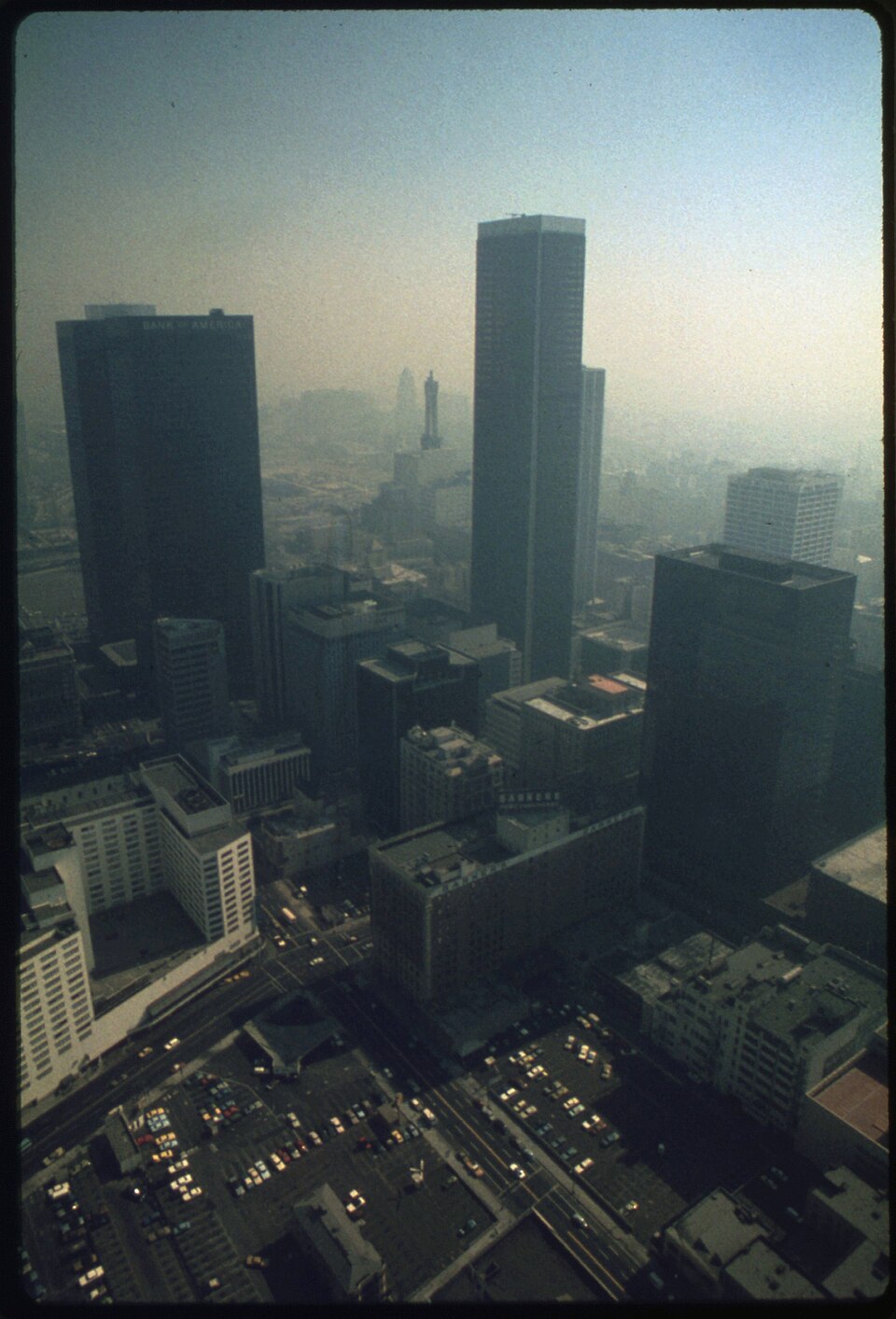
NAAQS cover six pollutants EPA is required to regulate because they are emitted from numerous sources and pose broad public health risks. Four of the six are direct or indirect products of burning oil. Counties that fail to meet NAAQS become "nonattainment areas" and face stricter permitting, reformulated fuel requirements, and vehicle inspection programs.
Table 15-1: NAAQS: The Six Criteria Pollutants
| Pollutant | Primary sources | Health effects | Current primary standard |
|---|---|---|---|
| Ozone (O3) | Not directly emitted; formed when NOx and volatile organic compounds (VOCs) react in sunlight | Lung irritation, asthma attacks, reduced lung function | 0.070 ppm (8-hour) |
| PM2.5 | Diesel exhaust, wood burning, power plants, secondary formation from SO2 and NOx | Cardiovascular disease, lung cancer, premature death | 9.0 µg/m³ (annual) |
| PM10 | Road dust, construction, crushing operations, diesel soot | Respiratory irritation, aggravated asthma | 150 µg/m³ (24-hour) |
| NO2 | Combustion in vehicles and power plants; acid rain precursor | Airway inflammation, contributes to ozone and PM | 100 ppb (1-hour) |
| SO2 | High-sulfur coal and residual oil combustion; acid rain precursor | Bronchoconstriction, aggravated asthma | 75 ppb (1-hour) |
| CO | Incomplete gasoline combustion, primarily on-road vehicles | Reduces oxygen delivery to organs; acute toxicity at high levels | 9 ppm (8-hour) |
| Lead (Pb) | Historically leaded gasoline (tetraethyl lead); now metal smelters, the furnaces that separate metal from ore, and piston aviation fuel | Neurological damage, especially in children | 0.15 µg/m³ (rolling 3-month) |
The quiet success story. Between 1970 and the mid-2020s, US emissions of the six criteria pollutants collapsed even as the economy grew. Per EPA Air Trends, aggregate emissions of the common pollutants dropped roughly 78% from 1970 levels while real GDP tripled, vehicle miles traveled roughly doubled, and population grew by more than half. Ambient lead concentrations are down more than 99% since the leaded gasoline phase-out. SO2 is down more than 90% since 1990, driven by Title IV acid rain trading and coal retirements. NOx and CO are each down roughly 70%. Particulate matter, ozone, and the climate problem remain real issues, but the bulk clean air fight of the twentieth century was won.
Figure 15-2 US Criteria Pollutant Emissions, 1970 to 2025 (Indexed, 1970 = 100)
Source: EPA Air Quality Trends. Emissions fell 70 to 99% while US GDP tripled over the same period.
California, CARB, and the Section 209 Waiver
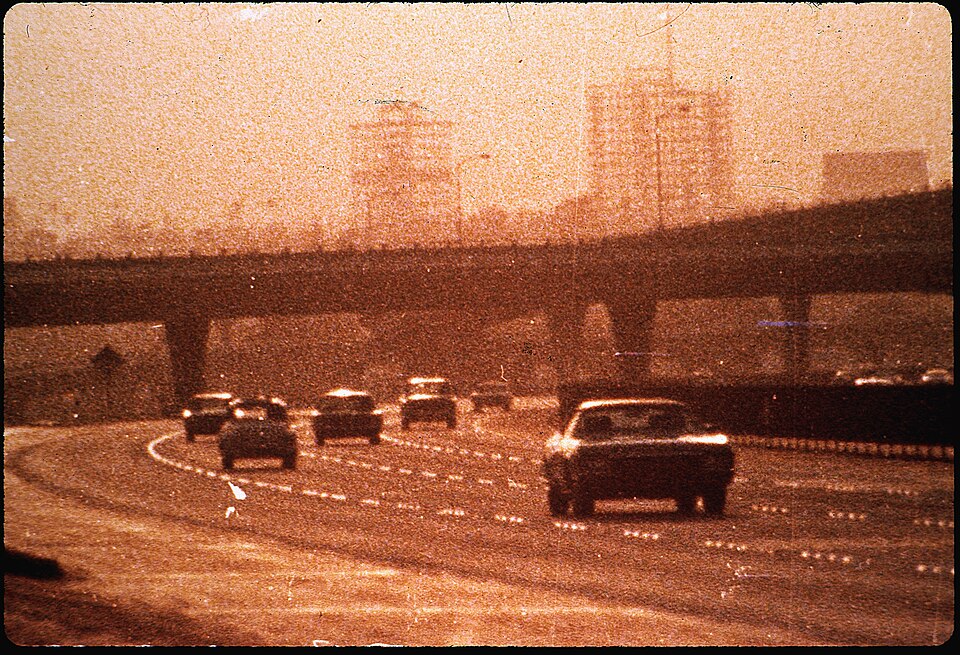
California is the only US state legally permitted to set vehicle emission standards stricter than the federal EPA. The Clean Air Act explicitly grandfathered California because it had adopted its own vehicle emission rules in 1966, before the 1970 federal framework existed. Section 209 of the Act allows California to apply to EPA for a waiver of federal preemption; once granted, other states are then allowed to opt into California's standards rather than EPA's. As of the mid-2020s, more than a dozen states, collectively covering roughly a third of the US vehicle market, follow the California rules.
The California Air Resources Board (CARB) administers the program. Its Low Emission Vehicle (LEV) framework, introduced in 1990 and revised through LEV I, LEV II, and LEV III, created the emission categories that became shorthand for vehicle cleanliness. The Zero Emission Vehicle (ZEV) mandate, first adopted in 1990 and repeatedly restructured, pushed automakers into battery, fuel cell, and plug-in hybrid development well ahead of federal requirements. The current Advanced Clean Cars II rule, adopted in 2022, requires 100% of new light-duty vehicles sold in California to be zero-emission or plug-in hybrid by model year 2035. The Section 209 waiver for this rule was revoked by the first Trump administration in 2019, restored by the Biden administration in 2022, and has been challenged again in 2025.
Table 15-2: California Vehicle Emission Classes
| Class | Name | Definition |
|---|---|---|
| LEV | Low Emission Vehicle | The baseline category under the LEV program; all new California vehicles must meet at least LEV standards |
| ULEV | Ultra Low Emission Vehicle | 50% lower NMOG and NOx than LEV |
| SULEV | Super Ultra Low Emission Vehicle | 90% cleaner than avg new gasoline vehicle for tailpipe HC and NOx |
| PZEV | Partial Zero Emission Vehicle | SULEV tailpipe plus zero evaporative emissions; 15-year / 150,000-mile warranty on emission components |
| ZEV | Zero Emission Vehicle | No tailpipe emissions: BEV, fuel cell, or (partial credit) plug-in hybrid |
Fuel Content: Gasoline, From Leaded to Tier 3
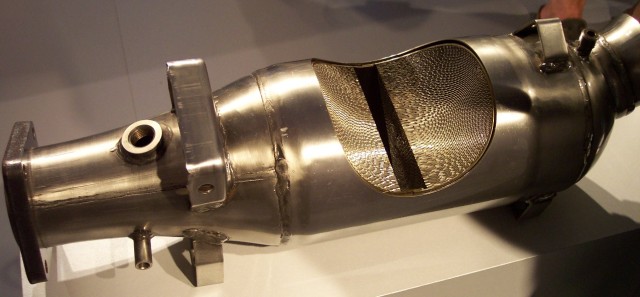
Gasoline specification changes over the past fifty years have been driven almost entirely by what downstream catalyst hardware required. The 1970 Clean Air Act required catalytic converters on new vehicles starting with the 1975 model year, and the noble metal catalysts (platinum, palladium, rhodium) on which they depend are irreversibly poisoned by lead. Lead was phased out of US gasoline between 1973 and 1995, not because lead had suddenly been recognized as a neurotoxin, but because catalysts would not survive it. The public health benefit, roughly a 99% drop in ambient lead and a corresponding drop in childhood blood lead levels, was a byproduct of the catalyst rollout.
The 1990 Clean Air Act amendments required reformulated gasoline (RFG) in the worst ozone nonattainment areas starting in 1995. RFG mandated lower summer RVP, reduced benzene and aromatics, and a minimum oxygen content, typically met by blending in MTBE. MTBE was phased out in the early 2000s after it was found in groundwater at levels that rendered drinking water undrinkable, and ethanol became the default oxygenate. The Renewable Fuel Standard (RFS), enacted in 2005 and expanded in 2007, set annual volume targets (RVOs) for ethanol and advanced biofuels, which in practice locked roughly 10% ethanol into the US gasoline pool. Chapter 9 (Finished Products) has the RFG and RFS specification detail.
Sulfur in gasoline was capped at 30 ppm average by Tier 2 in 2004 and tightened to 10 ppm by Tier 3 in 2017, bringing US gasoline in line with European specs and enabling the current generation of high-efficiency gasoline direct injection engines with close-coupled three-way catalysts. California's CARB gasoline program has run a cycle ahead of federal rules, with CARB 3 gasoline capping sulfur, aromatics, olefins, and T90 distillation temperature. Chapter 8 (Standards) contains the current gasoline spec numbers.
Fuel Content: Diesel, ULSD and the Catalyst Link
The diesel sulfur story runs parallel and for the same reason. On-road diesel was capped at 500 ppm sulfur in 1993 (low sulfur diesel, or LSD). Ultra-low sulfur diesel (ULSD) at 15 ppm became mandatory for on-road use in 2006, for locomotive and marine fuel in 2012, and for non-road equipment in 2014. The tightening was required because modern diesel after-treatment hardware, diesel particulate filters (DPF) to capture soot and selective catalytic reduction (SCR) to destroy NOx, cannot survive high-sulfur fuel. Sulfur oxides formed from fuel sulfur blind the SCR catalyst and clog the DPF regeneration cycle. ULSD was not primarily a sulfur-emissions rule; it was a hardware-enablement rule that also happened to cut sulfate particulate emissions.
The after-treatment stack on a modern diesel vehicle typically includes a diesel oxidation catalyst (DOC), a diesel particulate filter, and an SCR system that injects urea solution (diesel exhaust fluid, DEF, sold under the AdBlue brand in Europe) upstream of a vanadium or copper-zeolite catalyst. The urea decomposes to ammonia, which reacts with NOx over the catalyst to form nitrogen and water. Exhaust gas recirculation (EGR) and, on some vehicles, NOx adsorber traps (LNT) handle the rest. On the gasoline side, the three-way catalyst oxidizes CO and hydrocarbons while reducing NOx, with an upstream oxygen sensor keeping the air-fuel ratio locked in a narrow window around stoichiometric so all three reactions can run at once. Chapter 16 (Engine Technologies) covers the combustion side of the same hardware.
Operational Safety: Spills, Pipelines, and Tanks
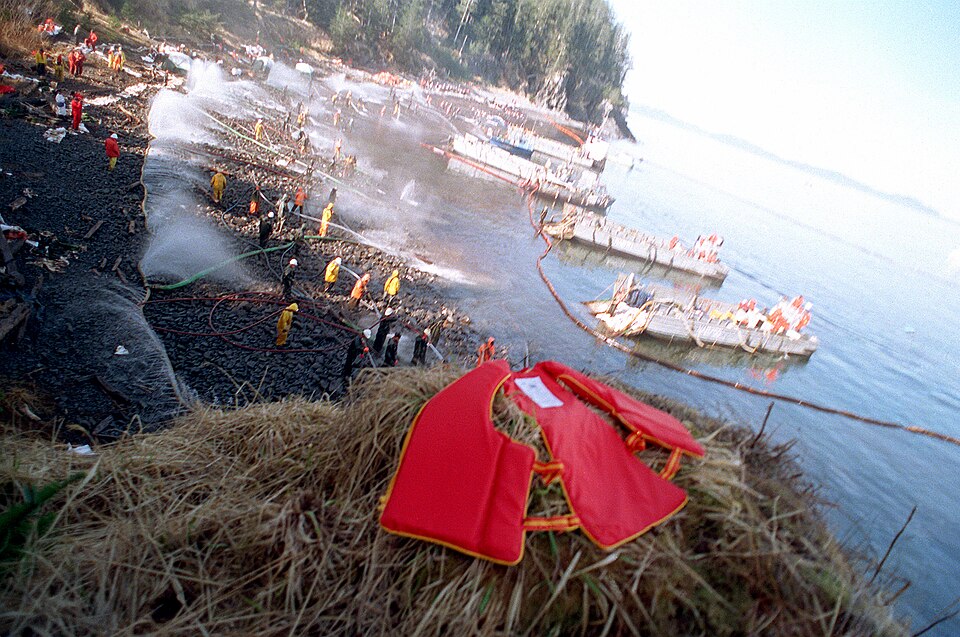
The Oil Pollution Act of 1990 (OPA 90) was enacted after the March 1989 Exxon Valdez grounding in Prince William Sound, Alaska, which released roughly 260,000 barrels of Alaska North Slope crude. OPA 90 imposed strict liability on spillers, created the Oil Spill Liability Trust Fund, required tanker owners to file vessel response plans, and mandated that all tankers operating in US waters transition to double-hull construction. Single-hull tankers were phased out on a schedule running through 2015. The international equivalent is MARPOL Annex I, administered by the IMO, which adopted parallel double-hull requirements for the global tanker fleet. Chapter 11 (Transporting Oil) covers the operational and economic consequences in detail.
Pipelines are regulated in the US by the Pipeline and Hazardous Materials Safety Administration (PHMSA), a part of the Department of Transportation. PHMSA's integrity management program requires operators to identify High Consequence Areas (HCAs), locations where a release would pose elevated risk to population, drinking water, or sensitive ecosystems, and to run regular inline inspection ("smart pig") runs, cathodic protection surveys, and hydrostatic tests on pipelines traversing them. Rail transport of crude and hazardous liquids is governed by the HAZMAT rules following the 2013 Lac-Megantic disaster in Quebec, which required phase-in of the stronger DOT-117 tank car design.
Above-ground storage tanks are governed by SPCC (Spill Prevention, Control, and Countermeasure) plans under the Clean Water Act. Every tank farm of meaningful size must have secondary containment, typically an earthen berm or concrete dike with an impermeable liner sized to hold the volume of the largest tank plus a rainfall allowance. When spills do occur, response crews deploy mechanical skimmers, booms, in-situ burning where conditions allow, and chemical dispersants. Dispersants remain controversial: the heavy use of Corexit 9500 and 9527 during the 2010 Deepwater Horizon response drew criticism over worker exposure and long-term ecological effects. Shoreline Cleanup Assessment Technique (SCAT) teams document oiling conditions and guide the transition from active cleanup to natural attenuation.
Greenhouse Gas Regulation
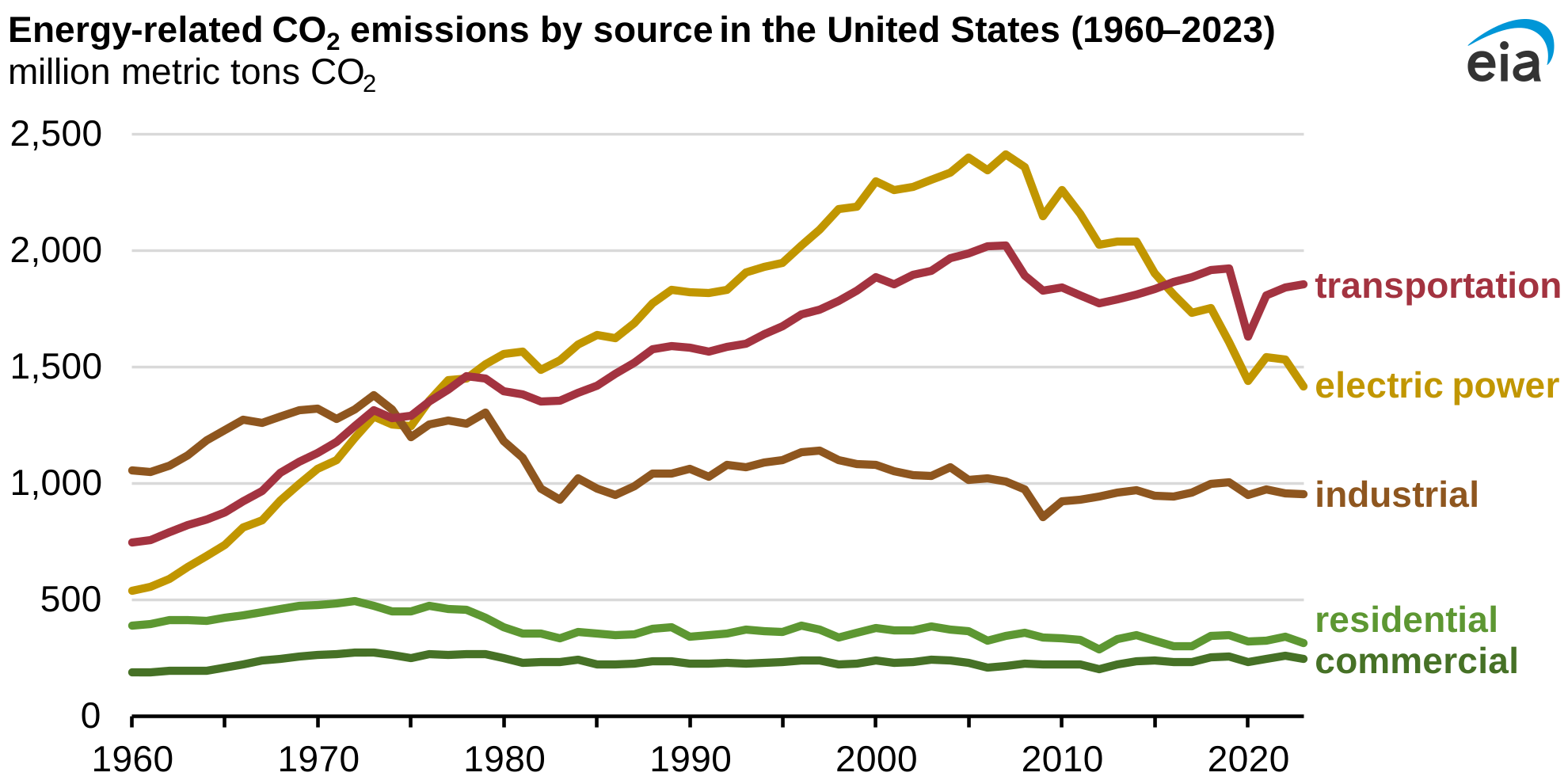
Of the six greenhouse gases tracked under the UN Framework Convention on Climate Change, carbon dioxide from burning fossil fuels is the largest single contributor to atmospheric warming on any realistic time horizon. Petroleum accounts for close to half of US energy-related CO2 emissions, principally from transportation fuels, with natural gas and coal making up most of the rest.
The international regulatory history starts with the Kyoto Protocol of 1997, which set binding emission reduction targets for developed-country signatories of roughly 5.2% below 1990 levels by 2012. The US signed but did not ratify Kyoto, citing the absence of binding targets on China and India. The EU Emissions Trading System (EU ETS), launched in 2005, became and remains the world's largest carbon cap-and-trade market, covering power generation, heavy industry, intra-EU aviation, and from 2024 maritime shipping. The 2015 Paris Agreement replaced Kyoto's binding targets with Nationally Determined Contributions (NDCs), pledges each country sets itself and revisits every five years.
US federal climate policy became real with the Inflation Reduction Act of August 2022, which deployed roughly $370 billion in clean-energy tax credits over ten years. The IRA credits most relevant to oil markets are section 30D (new clean vehicle credit, up to $7,500 per EV), section 45X (advanced manufacturing production credit for batteries, critical minerals, and solar), section 45V (clean hydrogen production credit, up to $3 per kilogram), sections 48E and 45Y (technology-neutral clean electricity credits), and section 45Q (carbon capture and sequestration credit). The One Big Beautiful Bill Act (OBBBA), signed July 4, 2025, rolled back several IRA provisions including the 30D EV credit and tightened the 45V hydrogen rules. Chapter 25 (Energy Transition) covers the post-OBBBA landscape in detail; the point here is that tax credits, not tailpipe rules, are now the dominant federal climate lever in the US.
The European Union Carbon Border Adjustment Mechanism (CBAM), with its definitive period beginning January 1, 2026, imposes a carbon price on imports of cement, steel, aluminum, fertilizers, hydrogen, and electricity into the EU, calculated to match the ETS price net of any carbon cost already paid at origin. CBAM is the first serious attempt at a border carbon tariff and is widely expected to expand in scope. For oil specifically, refined products are not in the initial CBAM scope, but upstream hydrogen and ammonia used in refining are, which means EU refiners importing blue or grey hydrogen from non-EU sources will pay a carbon penalty at the border.
Methane: The Other Oil and Gas Greenhouse Gas
Methane is the second largest anthropogenic greenhouse gas, and any statement of how much worse than CO2 it is has to name a length of time. The reason is that the two gases leave the atmosphere by completely different routes. Methane is destroyed chemically, mostly by reaction with hydroxyl radicals in the lower atmosphere, on a timescale of about twelve years, so a tonne released today is largely gone within a human generation. Carbon dioxide has no single lifetime at all. It circulates between the atmosphere, the ocean, and the biosphere, and a substantial fraction of any release is still in that circulation a thousand years later. Adding up the warming from a gas that burns out quickly against one that effectively accumulates therefore requires choosing how long a window to add it up over, and the answer moves with the window.
That comparison is the global warming potential, or GWP, and it is meaningless without the horizon attached to it. On the IPCC's Sixth Assessment values, a tonne of fossil methane does about 83 times the warming of a tonne of CO2 when the total is taken over 20 years, and about 30 times when it is taken over 100. Both figures are correct, because they answer different questions, and which one a party quotes usually says something about the conclusion it wants drawn. The 100-year number is the regulatory default: national inventories under the UN convention run on it, and the conversion table in the US greenhouse gas reporting rule is titled "Global Warming Potentials, 100-Year Time Horizon". The 20-year number is the one cited by anyone arguing that cutting methane is the fastest available lever on near-term temperature, which it is, and for the same reason the gas scores badly on that horizon in the first place. Methane leaves quickly enough that stopping the emissions stops most of the warming they cause within decades rather than centuries.
A meaningful fraction of global methane emissions comes from oil and gas upstream operations: well venting, pneumatic controllers, incomplete flaring, compressor station leaks, and tank flashing. EPA's final methane rule, issued in late 2023 and phasing in through 2024-2026, requires routine leak detection and repair (LDAR) at well sites, phases out most routine flaring of associated gas, and tightens standards on storage tanks and pneumatic devices. The IRA added a parallel methane emissions charge under section 136 of the Clean Air Act, a fee per ton of reported methane emissions above a threshold for large oil and gas facilities, starting at $900 per tonne of methane. OBBBA pushed it out by a decade rather than repealing it, so the charge now applies to emissions reported for calendar year 2034 and after. Outside the US, the EU Methane Regulation adopted in 2024 imposes monitoring, reporting, verification, and LDAR requirements on both domestic production and, eventually, imported oil and gas.
Vehicle Fuel Economy and Tailpipe GHG Rules
On the demand side, US vehicle fuel economy is regulated through two parallel federal programs that often contain conflicting numbers. Corporate Average Fuel Economy (CAFE) standards are administered by NHTSA under the Energy Policy and Conservation Act of 1975 and are expressed in miles per gallon. EPA greenhouse gas tailpipe standards, authorized by the 2007 Massachusetts v. EPA Supreme Court decision and first issued in 2010, are expressed in grams of CO2 per mile. The two programs are harmonized in theory but in practice the EPA GHG rule often contains the stricter effective number, because it is harder to comply with using flex-fuel credits and is not subject to the same NHTSA restrictions on averaging across classes. California's Advanced Clean Cars II program runs on top of both.
Both programs are written in model years rather than calendar years, a distinction that matters more than it looks. A model year 2031 vehicle typically reaches showrooms during calendar 2030, and the engine and platform decisions behind it are frozen several years before that. A standard dated 2031 is therefore a constraint on capital already being committed today, which is why automakers litigate these rules so far in advance of the year printed on them.
Table 15-3: US Vehicle Fuel Economy Standards
| Year | Standard | Milestone |
|---|---|---|
| 1975 | 18 mpg | CAFE enacted under Energy Policy and Conservation Act; response to 1973 embargo |
| 1987 | 27.5 mpg | Peak US passenger car fleet efficiency under the original CAFE program |
| 2007 | 35 mpg | EISA raised combined car/truck CAFE target to 35 mpg by 2020 |
| 2024 | 50.4 mpg | NHTSA finalized standards requiring a 50.4 mpg fleet average by model year 2031 |
| 2025 | In flux | NHTSA began rulemaking in 2025 to roll back 2024 standards; program remains law but under revision |
CAFE remains on the books and is still the primary federal fuel economy mechanism, but the actual mpg target a manufacturer must hit is now a moving political variable rather than a settled engineering goal. In parallel, EPA tailpipe greenhouse gas standards, California's Advanced Clean Cars II program, and the federal EV tax credits introduced by the IRA (partially repealed in 2025) have become at least as important as CAFE in shaping what automakers actually build.
The above was updated in 2026. For the full original 2009 chapter, download the 1st edition 2009 PDF.